



Porcelain veneers typically last 10 to 15 years, with some patients getting 20 or more years from proper care. Composite veneers last 5 to 7 years on average. Lifespan depends on the material you choose, how well they were bonded, and daily habits, especially teeth grinding, biting hard objects, and skipping regular checkups.
You’ve just invested in a new smile, or you’re seriously considering it, and there’s one question sitting underneath all the excitement. How long is this actually going to last? Fair question. Veneers aren’t cheap, and nobody wants to redo this in three years because of a habit they didn’t know was a problem.
Here’s the good news. Veneers are genuinely durable when they’re placed well and cared for properly. The lifespan isn’t fixed, though. It depends on the material you choose and a handful of daily habits that most patients never get told about until something chips. At Yardley Dental Arts, we walk every veneer patient through exactly what affects their specific lifespan, not a generic pamphlet handed out at checkout.
Key Points at a Glance
Not all veneers age the same way, and the material is the single biggest factor.
Porcelain veneers are thin shells of dental ceramic, custom-made in a lab and bonded to your teeth. They resist staining well, hold up to daily wear, and typically last 10 to 15 years, sometimes 20 or more with excellent care.
Composite veneers are built directly on your teeth using a tooth-colored resin. They cost less and can often be completed in a single visit, but they’re softer than porcelain and generally last 5 to 7 years before needing touch-ups or replacement.
Neither is the wrong choice. Composite makes sense for a faster, lower-cost option or for testing a new smile before committing further. Porcelain makes sense for investing once and going the better part of two decades without thinking about it again.
| Factor | Porcelain Veneers | Composite Veneers |
| Average lifespan | 10–15 years (up to 20+) | 5–7 years |
| Stain resistance | Excellent | Fair, more prone to staining |
| Cost | Higher | Lower |
| Placement time | Multiple visits | Often single visit |
Porcelain veneers typically last 10 to 15 years, and some patients get 20 years or more with excellent care. Composite veneers usually last 5 to 7 years. Habits and how well the veneers are maintained make the biggest difference within that range.
Schedule Your Veneer Consultation at Yardley Dental Arts Considering veneers, or want a care plan built around your actual habits instead of a generic checklist? Book Your Appointment |
A few habits do more damage than most patients expect.
Yes, it’s one of the biggest factors. The repeated pressure from grinding, especially at night, is a leading cause of early veneer chips and cracks. A custom nightguard is a small step that meaningfully protects your investment.
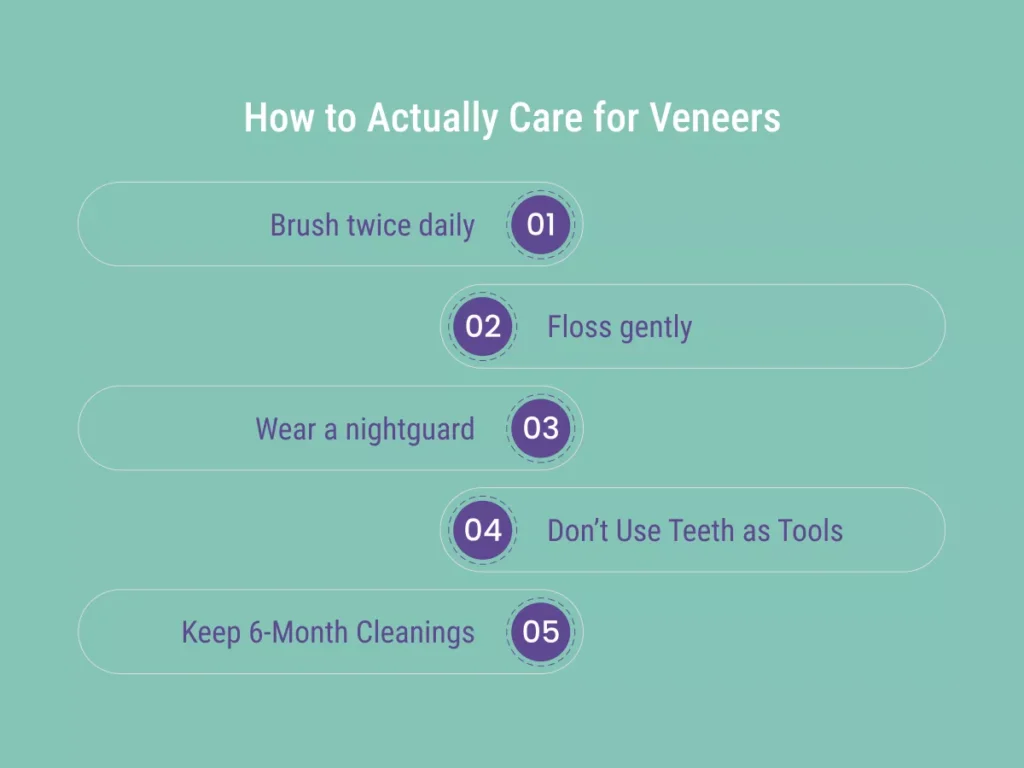
The routine isn’t complicated. It’s mostly small adjustments to habits patients already have.
None of this is harder than caring for natural teeth. It’s just slightly more deliberate.
Watch for these signs, and don’t wait it out if you notice them:
If a veneer feels loose or your gumline becomes sensitive, see your dentist within a couple of days. A debonded veneer left in place lets bacteria reach the tooth underneath, turning a simple re-bonding into a larger repair.
Small chips can often be smoothed and polished during a regular visit. Larger chips that expose the underlying tooth or cement typically require a full replacement, since porcelain does not reliably bond to itself.
Read More About: Important Tips to Know About Implant Dentistry
Porcelain veneers resist staining very well, generally better than natural enamel. The bonding material at the edges can pick up staining over time, though, especially with heavy coffee, red wine, or tobacco use. Composite veneers are more prone to staining than porcelain overall.
Understanding how veneers age helps patients protect their investment rather than discover problems too late.
At Yardley Dental Arts, we walk through your specific habits, whether you grind your teeth, your diet, your staining risk, and build a care plan around that, not a one-size-fits-all handout. This is part of every veneer consultation, not an afterthought.
Veneers are meant to be a long-term upgrade, not a recurring expense. The difference between 7 years and 17 years usually comes down to a few habits and a dentist who checks on them regularly. Porcelain veneers typically last 10 to 15 years, composite veneers 5 to 7 years, and the biggest factors within those ranges are grinding, diet, hygiene, and consistent checkups.
If you are considering veneers or already have them and want a real care plan built around your habits, the practical next step is a consultation with our Yardley team.
Yardley Dental Arts is a patient-focused dental practice in Yardley, PA at 501 Floral Vale Blvd, serving families across the lower Bucks County area. Dr. Purvi Patel leads a practice built around one-on-one time with every patient, honest conversations about what your smile actually needs, and premier materials throughout. From porcelain veneers to full cosmetic smile planning, every treatment plan is specific to you, not a generic protocol.
Call (215) 504-2400 or book online.
Porcelain veneers typically last 10 to 15 years, and some patients get 20 years or more with excellent care. Composite veneers usually last 5 to 7 years. Your habits and how well they’re maintained make the biggest difference within that range.
Not dramatically different, but a few adjustments help. Use non-abrasive toothpaste, floss gently rather than snapping the floss, and wear a nightguard if you grind your teeth. Otherwise, brushing twice daily and regular checkups apply just like natural teeth.
Porcelain veneers resist staining very well, better than natural enamel in most cases. The bonding material at the edges can pick up staining over time, especially with heavy coffee, red wine, or tobacco use.
There’s no fixed schedule. Porcelain veneers are typically replaced when they show real wear, damage, or the bond starts to fail, often 10 to 15 years out. Six-month checkups are how your dentist tracks this and lets you know before it becomes urgent.
Yes. Most patients notice a slight adjustment period with speech and biting in the first week or two as they get used to the new shape. This settles quickly and is not a sign of a problem.
The cost of veneers depends on the material chosen, how many teeth are involved, and your specific smile goals. We provide a personalized estimate after an in-office evaluation so there are no surprises before treatment begins.
"My mission is to always provide extraordinary dental care in a compassionate setting. At Yardley Dental Arts, quality is key! We are NOT a high volume, high turnover office. We are patient centric office. Our practice model allows for concierge service and exclusive one on one time with the doctor and the hygienists. We pride ourselves on using premier materials, labs and the latest in dental technology including our GREEN CT 3D SCANNER, delivering high quality images at a fraction of the radiation as compared to the standard. This allows for fully customized treatment plans focusing on your specific needs and comfort level.
It’s a pleasure to serve you and your family for your comprehensive dental needs. Every one of us is passionate about what we do, and it shows! I look forward to meeting you."
