



Composite fillings are tooth-colored resin fillings bonded directly to your tooth, while amalgam fillings are silver-colored and made from a metal alloy. Composite blends in with your smile and bonds tightly to healthy tooth structure. Amalgam has a long track record for durability in back teeth. Yardley Dental Arts helps Bucks County patients choose based on the cavity’s location and their priorities.
Key Takeaways
You bite into an apple and feel a twinge. Or maybe your last checkup turned up a small cavity nobody mentioned before. Either way, you’re probably not thinking about filling materials until you’re sitting in the chair being asked to choose one.
That’s a common moment for patients across Yardley, Newtown, and Langhorne. Nobody explains the difference beforehand, so the decision feels rushed. Here’s the good news: it doesn’t have to be complicated once you understand what each material actually does.
Composite and amalgam fillings both repair the same problem: a cavity where decay has eaten into your tooth. But they’re built differently, they look different, and they fit different situations. This guide breaks down both, so you walk into your next appointment already knowing what questions to ask.
Let’s start with what actually separates them.
Composite fillings are made from a tooth-colored resin that bonds directly to your enamel and dentin, blending in with the rest of your tooth. Amalgam fillings use a metal alloy, typically a mix of silver, tin, copper, and mercury, packed into the prepared cavity. Both materials seal out bacteria and restore chewing function, but they differ in appearance, bonding method, and how much natural tooth structure needs removal.
Ever wonder what actually happens if you just leave a small cavity alone? Decay doesn’t stop on its own. It spreads through the enamel, then into the softer dentin underneath, and eventually toward the nerve if it’s ignored long enough.
Bucks County patients sometimes put off a small filling because it isn’t painful yet. That’s understandable, but it’s also how a simple filling turns into a bigger problem. Catching the symptoms of tooth decay early is what keeps the fix small, and knowing what to expect during a cavity filling can make that first appointment feel a lot less intimidating.
Filling a cavity removes the decayed portion and seals the space so bacteria can’t keep working their way in. The material you choose for that seal is where composite and amalgam start to differ.
Composite fillings are built from a resin material mixed with fine glass or quartz particles, shaded to match your natural tooth color. Dr. Smolen applies the material in layers, hardening each one with a curing light, then shapes and polishes it to blend with the surrounding tooth.
Here’s what makes composite different: it bonds chemically to your tooth structure. That bond means we often remove less healthy enamel compared to preparing a tooth for amalgam, since amalgam relies on mechanical retention rather than a direct bond. This ties directly into why restorative dentistry has shifted toward materials that preserve as much natural tooth as possible.
Patients in Newtown frequently choose composite for front teeth and visible areas, simply because it disappears into the smile. But composite has come a long way in strength, and many dentists now use it in back teeth too, depending on the size and location of the cavity.
Strategy Session: Curious which filling type fits your specific cavity? Book a consultation with Dr. Smolen, and we’ll examine the tooth and walk you through the best option for your situation. |
Amalgam fillings, sometimes called silver fillings, have been used in dentistry for well over a century. The material is a mix of metals, including silver, tin, copper, and a small amount of mercury that binds the alloy together once set.
Why does amalgam still get used at all if composite exists? Durability is the main answer. Amalgam holds up well under the heavy chewing force found in molars, and it’s less sensitive to moisture during placement than composite.
The FDA states that dental amalgam is considered safe for adults and children ages six and older, based on the best available scientific evidence. Some Bucks County patients still prefer to avoid it anyway, whether for cosmetic reasons or personal peace of mind, and that’s a completely reasonable topic to raise when you’re reviewing your dental insurance coverage before treatment.
According to the FDA, dental amalgam fillings are safe for the general population, including children over six years old. Certain groups, including pregnant women and young children under six, may be advised to consider alternatives out of caution rather than confirmed risk. Your dentist can walk you through current guidance based on your specific health history.
So which one wins? It depends on what you’re weighing most: appearance, longevity, or how much healthy tooth gets preserved. Morrisville patients ask us to lay it out plainly, so here’s the side-by-side.
| Factor | Composite Fillings | Amalgam Fillings |
| Appearance | Matches natural tooth color | Silver, visible when you open your mouth |
| Bonding | Chemically bonds to tooth structure | Held in place mechanically |
| Tooth Preparation | Often preserves more healthy tooth | Typically requires more removal |
| Durability | Strong, improving with newer materials | Long track record in high-pressure molars |
| Placement Time | Can take slightly longer to place | Generally faster to place |
| Best For | Visible teeth, moderate cavities | Back molars, larger cavities |
Neither option is wrong. It really comes down to where the cavity sits in your mouth and what matters most to you, which is exactly the kind of decision our restorative dentistry team walks through with every patient before treatment starts.
Composite fillings offer a tooth-colored appearance and bond directly to the tooth, while amalgam fillings have a long track record for durability under heavy chewing force. The right option depends on the cavity’s size, location, and the amount of healthy tooth structure that needs to be preserved.
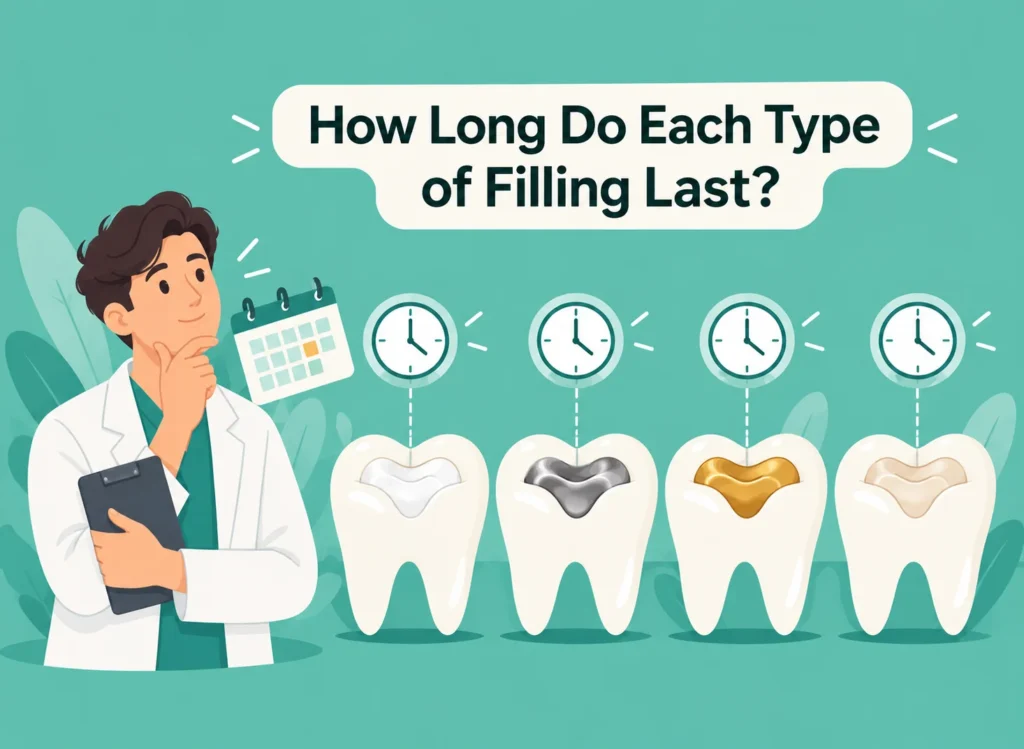
Langhorne patients often ask this before anything else: how many years am I actually getting out of this filling? Fair question, and the honest answer depends on your bite, your oral hygiene, and the size of the original cavity.
Amalgam fillings have a long-standing reputation for durability, often holding up for many years in molars that handle heavy chewing. Composite fillings have improved significantly in strength over recent decades, though very large composite fillings in high-pressure areas may need monitoring and eventual replacement sooner than amalgam in the same spot. That kind of long-term monitoring is one of the reasons restorative dentistry matters beyond just the initial fix.
Regular checkups matter more than the material itself here. Dr. Smolen checks every filling at your routine visits to catch wear before it becomes a bigger problem.
Custom Quote: Want to know which filling option fits your specific tooth? Every cavity is different in size and location. Bring your dental insurance details to a consultation and we’ll put together a straightforward estimate. |
Bucks County patients with older amalgam fillings sometimes ask whether they should switch them out for composite, especially if the fillings are visible when they smile. Replacing amalgam with composite is possible, but the American Dental Association does not recommend removing amalgam fillings solely for cosmetic reasons if they’re otherwise intact and functioning well.
That said, if an amalgam filling is cracked, leaking, or decayed underneath, replacement makes sense regardless of the material chosen for the new filling. In some cases, a filling that’s failed too many times is better served by a dental crown instead of another filling, and Dr. Smolen will tell you if that’s the better long-term fix.
Reasons to consider replacing an old filling:
If none of those apply, an intact amalgam filling usually doesn’t need to be replaced just for appearance.
Here’s something patients don’t always expect: both filling types need the same basic aftercare, even though the materials are different.
Lower Makefield patients who’ve had both types often tell us the daily routine feels identical once the filling settles in. Routine dental x-rays also help us catch any hidden wear or decay under a filling before it becomes noticeable to you.
Related Content: Not sure if you even have a cavity yet? Our guide on the symptoms of tooth decay walks through the early warning signs to watch for, and our tips for preventing cavities can help you avoid needing a filling in the first place. |
Choosing a filling material shouldn’t feel like guesswork, and it shouldn’t be rushed through in five minutes either.
Dr. Alan Smolen has practiced dentistry in the Yardley area for more than 30 years and serves as an associate clinical professor at NYU College of Dentistry. He trained at the Pankey Institute for advanced dental education and holds memberships with the American Dental Association, the Pennsylvania Dental Association, and the American Academy of Cosmetic Dentistry.
Our practice has built a 4.9 out of 5 rating across more than 400 Google reviews, with patients frequently mentioning that treatment options get explained clearly before any work begins. That’s exactly how we handle filling decisions too. You can see fillings alongside everything else we handle in our full list of dental services.
Done-For-You Service: Ready to get that cavity handled without the guesswork? Bring your questions and we’ll examine the tooth, explain your options, and recommend the material that fits your situation. |
Composite and amalgam fillings both do the same core job: stopping decay and restoring your tooth. The right choice for you depends on where the cavity sits, how it looks when you smile, and what matters most to you personally.
Why does this decision matter beyond the appointment itself? Because the material you choose today affects how your tooth looks and functions for years, whether that’s a molar doing the heavy lifting at dinner or a front tooth you see every time you smile in photos.
Here’s your next step. If you’ve been putting off a cavity, or you’re curious about switching out an old filling, bring your questions to Dr. Smolen and our team.
Yardley Dental Arts has served Bucks County patients for more than 30 years, with a 4.9 out of 5 rating across 429 Google reviews and a team that explains every option in plain language.
You don’t need to have it all figured out before you call. Call (215) 504-2400 or reach out through our website to get started.
Yes. We offer both tooth-colored composite fillings and traditional amalgam fillings, and we help you choose based on the cavity’s size, location, and your personal preferences. Every recommendation starts with an exam so we can see exactly what we’re working with.
Composite fillings offer a tooth-colored appearance and bond directly to the tooth, while amalgam fillings have a long track record for durability under heavy chewing force. The right option depends on the cavity’s size, location, and the amount of healthy tooth structure that needs to be preserved.
Most filling appointments take under an hour, though the exact time depends on the number of teeth being treated and the size of the cavities. Composite fillings can take slightly longer to place than amalgam because of the layering process. Dr. Smolen will give you a time estimate before starting.
Composite fillings offer a tooth-colored appearance and often preserve more natural tooth structure. Amalgam fillings have a longer track record for durability under heavy chewing force in molars. Neither is universally better. The right choice depends on where the cavity is and what you’re prioritizing.
Amalgam remains in use because of its durability under heavy chewing force, particularly in molars. According to the FDA, dental amalgam is considered safe for the general population. Some patients prefer it for back teeth where appearance matters less.
Yes. Dr. Smolen has practiced in the Yardley area for more than 30 years and regularly treats patients traveling from Newtown, Langhorne, Morrisville, and throughout Bucks County for fillings and other restorative work.
Yes, this is possible, but the American Dental Association does not recommend removing intact, functioning amalgam fillings solely for cosmetic reasons. If a filling is cracked, leaking, or decaying underneath, replacement makes sense and you can choose composite at that time. If the tooth has broken down too much for a filling, we’ll discuss whether a crown or bridge makes more sense instead.
You can call our office directly at (215) 504-2400 or reach out through our website contact form. We’ll schedule an exam to evaluate the cavity and walk you through your filling options before any treatment begins.
"My mission is to always provide extraordinary dental care in a compassionate setting. At Yardley Dental Arts, quality is key! We are NOT a high volume, high turnover office. We are patient centric office. Our practice model allows for concierge service and exclusive one on one time with the doctor and the hygienists. We pride ourselves on using premier materials, labs and the latest in dental technology including our GREEN CT 3D SCANNER, delivering high quality images at a fraction of the radiation as compared to the standard. This allows for fully customized treatment plans focusing on your specific needs and comfort level.
It’s a pleasure to serve you and your family for your comprehensive dental needs. Every one of us is passionate about what we do, and it shows! I look forward to meeting you."
